
Twin-chamber balers are designed for businesses that generate multiple waste streams, such as cardboard and plastic film, and want to bale both without the need for two separate machines. With two chambers side by side and one movable press plate, they save space and streamline waste segregation.
We compared the Pakawaste VB200D with the Compact & Bale-supplied MK1100 Twin to see which offers the best long-term value.
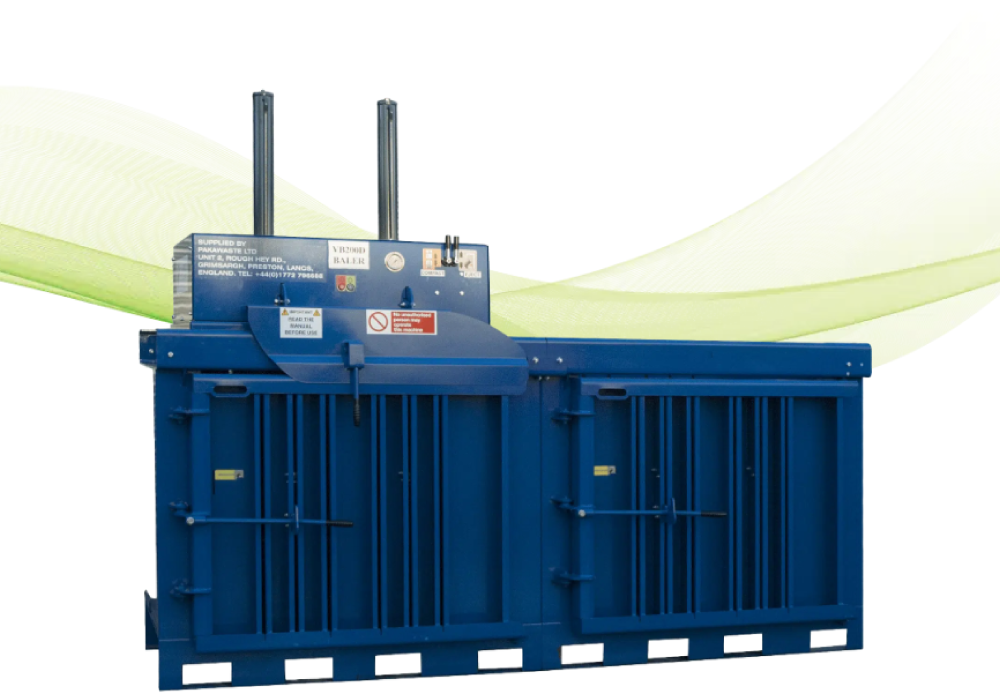
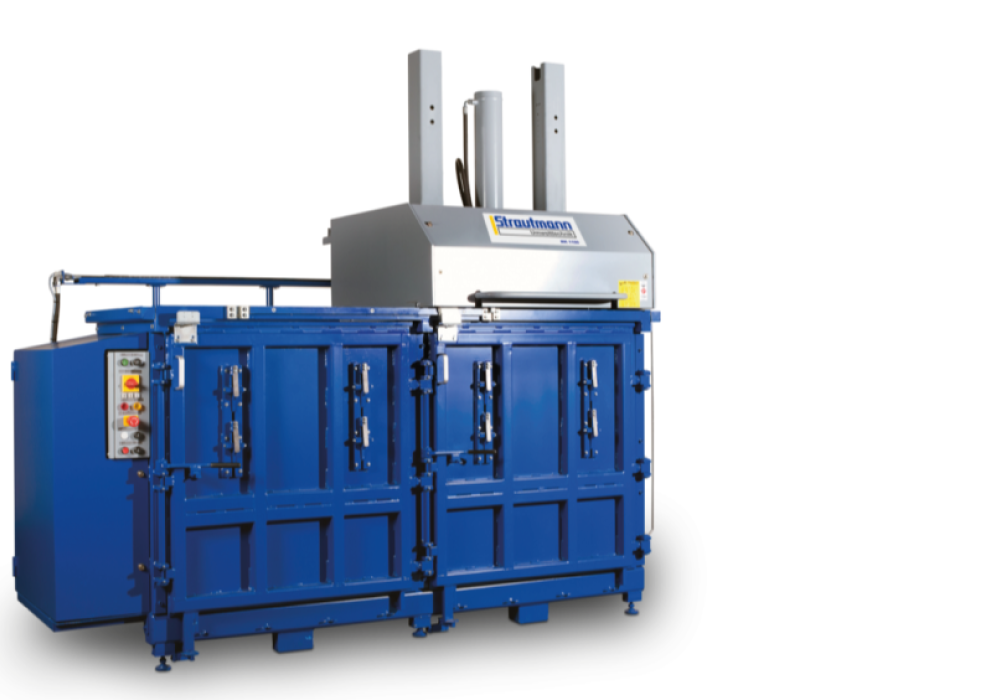
Build Quality and Design
The VB200D is a heavy-duty twin-chamber vertical baler. Each chamber can be loaded separately, and the press plate slides across to compact whichever side is full. Its design makes it a reliable workhorse for businesses that need to process different materials.
The MK1100 Twin offers the same twin-chamber format but in a more compact footprint, designed to save space on site. It’s built with robust steel construction and reinforced press plates to ensure reliability under daily use.
Verdict: Both are strong machines, but the MK1100 Twin is more space-efficient for tighter sites.
Performance and Capacity
The VB200D produces medium-weight bales of around 200 kg, depending on the material. This is sufficient for recyclers and reduces the number of bales compared to entry-level machines.
The MK1100 Twin produces similar bale weights, typically up to 250 kg, giving it a like-for-like performance. The added advantage is Compact & Bale’s focus on optimising bale density for higher rebates.
Verdict: Both machines perform equally, but the MK1100 Twin has an edge in bale density and efficiency.
Usability and Features
The VB200D is straightforward to operate, with manual bale ejection and easy loading into either chamber. Its controls are simple, keeping training requirements low.
The MK1100 Twin works in much the same way but benefits from slightly larger loading apertures and a user-friendly design. Compact & Bale also provide full servicing and training support, ensuring smooth operation.
Verdict: Both are user-friendly, but Compact & Bale back this up with stronger support and aftercare.
Energy Efficiency and Running Costs
The VB200D runs on a standard three-phase supply, making it powerful enough for consistent use. Its running costs are typical for machines of this size.
The MK1100 Twin offers the same power setup but benefits from Compact & Bale’s preventative servicing and rebate collection model, reducing lifetime costs by ensuring baled materials are collected and paid for.
Verdict: Equal on energy, but MK1100 Twin lowers lifetime costs through integrated services.
Specification Comparison: VB200D vs MK1100 Twin
| Feature | Pakawaste VB200D | Compact & Bale MK1100 Twin |
|---|---|---|
| Type | Twin-chamber vertical baler | Twin-chamber vertical baler |
| Press Force | 15 tonnes | 20 tonnes |
| Bale Weight | 200 kg | Up to 250 kg |
| Chambers | 2 | 2 |
| Loading Aperture | Medium-sized | Slightly larger (better for bulkier items) |
| Cycle Time | 34 seconds | ~40 seconds |
| Power Requirement | 3-phase supply | 3-phase or single-phase options |
| Ejection | Manual | Manual |
| Suitable Materials | Cardboard, plastics | Cardboard, plastics |
Why Multi-Chamber Matters
Being able to bale two waste streams at once saves time, floor space, and labour compared to batching. Both machines deliver this benefit, but the MK1100 Twin enhances it by producing slightly denser bales and offering full-service integration, including collection and rebates.
Wrapping Up
The Pakawaste VB200D is a reliable, straightforward twin-chamber baler that helps businesses manage mixed recyclables efficiently.
The Compact & Bale MK1100 Twin delivers the same performance but with denser bales, a more space-saving design, and the added advantage of collection and rebate services. For businesses seeking a complete solution rather than just a machine, the MK1100 Twin wins out.