
For small-to-medium businesses producing modest volumes of cardboard and plastic waste, twin-chamber balers are a cost-effective solution. They allow two waste streams to be managed side by side in one machine, saving floor space and reducing the need for multiple balers.
We compared the KK66 twin baler with the Compact & Bale-supplied MK700 Twin baler to see which delivers the best performance and long-term value.
Build Quality and Design
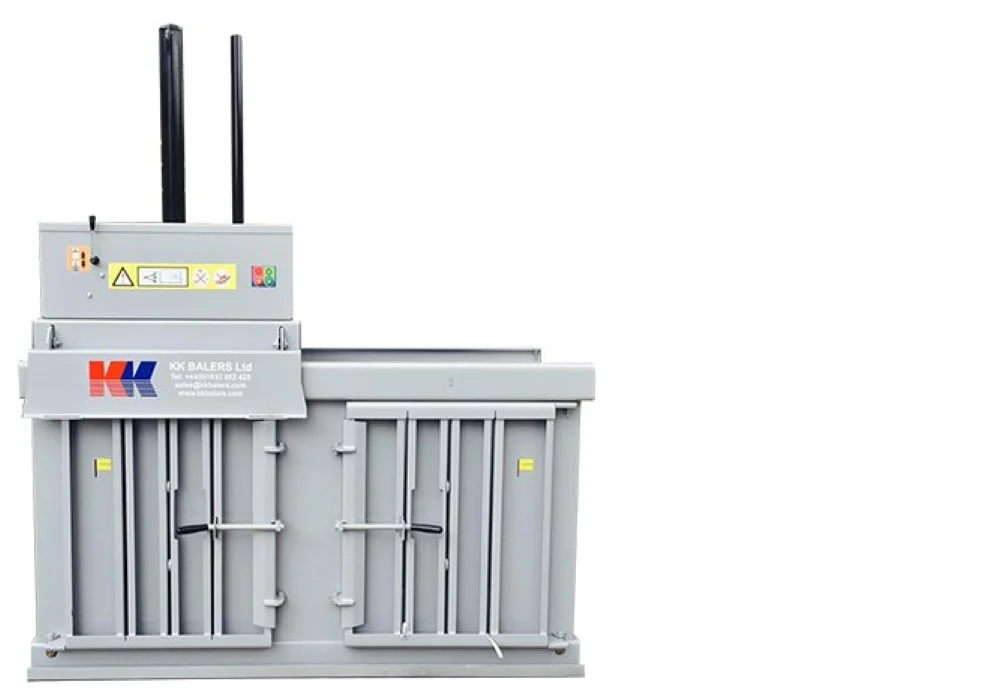
The KK66 is a compact twin-chamber baler built for smaller sites such as shops, schools, or offices. Its dual chambers allow operators to segregate waste at source and bale two materials independently, making recycling simple for mixed streams.
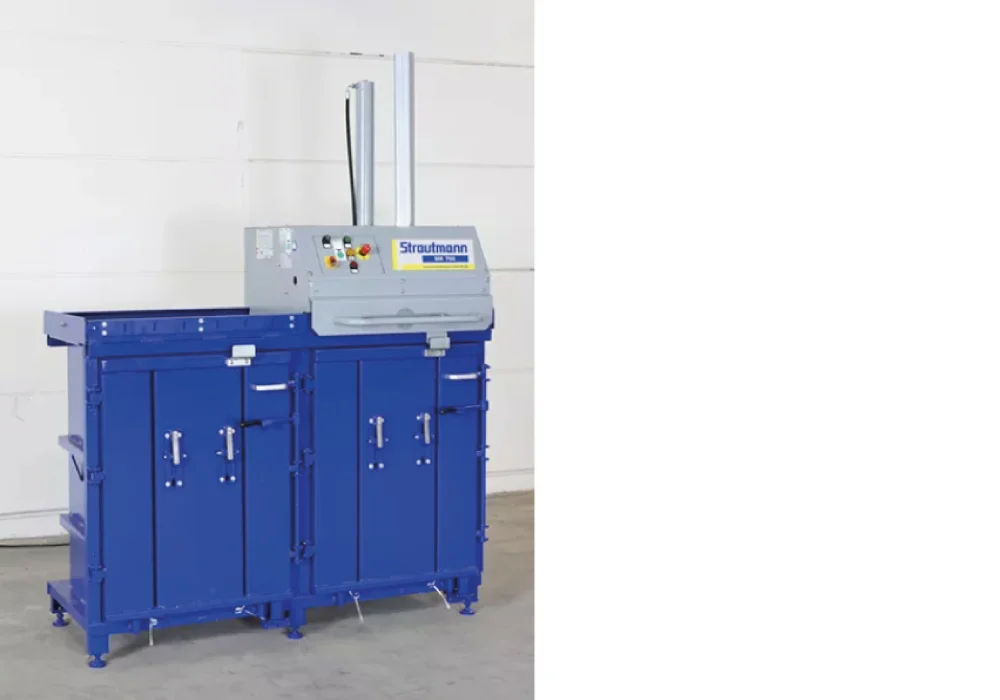
The MK700 Twin is also a twin-chamber baler but built with a stronger frame and press system. Its design delivers denser bales, and it’s backed by Compact & Bale’s service model, which includes training, aftercare, and rebate collection.
Verdict: Both are compact and practical; MK700 Twin is more robust for frequent use.
Performance and Capacity
The KK66 produces bales of up to 75 kg, depending on material. These are light and easy to handle, making the machine well suited for smaller waste producers.
The MK700 Twin produces slightly lighter bales of up to 60 kg, but thanks to its higher 6-tonne press force, these bales are denser and more consistent in quality.
Verdict: KK66 wins on bale weight; MK700 Twin wins on bale density.
Usability and Features
The KK66 is straightforward to operate, with a 35-second cycle time and safe manual bale ejection. Its simplicity makes it accessible to staff with minimal training.
The MK700 Twin has a slightly faster cycle time of 32 seconds and higher press force, which means less downtime and better compaction. Compact & Bale also provide operator training and servicing to ensure smooth day-to-day use.
Verdict: Both are easy to use; MK700 Twin is faster and better supported.
Energy Efficiency and Running Costs
The KK66 runs on a single-phase power supply and has very low running costs, making it efficient for small businesses. Servicing is arranged through KK Balers.
The MK700 Twin also runs efficiently on a single-phase connection, but Compact & Bale differentiate with their collection and rebate model, turning bales into a revenue stream. This offsets costs and adds long-term financial benefits.
Verdict: Equal on efficiency; MK700 Twin delivers better ROI with rebates.
Specification Comparison: KK66 vs MK700 Twin
| Feature | KK66 | Compact & Bale MK700 Twin |
|---|---|---|
| Type | Twin-chamber vertical baler | Twin-chamber vertical baler |
| Press Force | 3.5 tonnes | 6 tonnes |
| Bale Weight | Up to 75 kg | Up to 60 kg |
| Cycle Time | 35 seconds | 32 seconds |
| Power Requirement | Single-phase | Single-phase |
| Chambers | 2 | 2 |
| Bale Ejection | Manual | Manual |
| Suitable Waste | Cardboard, plastics | Cardboard, plastics |
| Aftercare & Service | KK Balers servicing | C&B servicing + collection and rebates |
Why Bale Density Matters
While the KK66 produces heavier bales (75 kg), the MK700 Twin’s stronger 6-tonne press means its bales are denser. Denser bales reduce storage space, make transport more efficient, and help achieve better rebate rates.
Wrapping Up
The KK66 is a good choice for smaller businesses needing a straightforward twin-chamber baler. It produces slightly heavier bales and is simple to operate, making it suitable for light-to-medium use.
The Compact & Bale MK700 Twin matches this but goes further. With stronger compaction, faster cycle times, and the added benefit of Compact & Bale’s collection and rebate service, it delivers better efficiency and stronger long-term ROI.
For light users, the KK66 is a solid option. But for businesses wanting denser bales, faster throughput, and financial returns, the MK700 Twin is the better option.