
Mini balers are designed for small businesses that generate modest volumes of cardboard and plastic waste but still want the benefits of baling, including reduced waste collections, tidier workspaces, and even potential rebates. They’re compact, easy to use, and fit neatly into shops, offices, and small warehouses.
We’ve compared the KK Mini Baler with the Compact & Bale Mini Balers BP3CD/BP4CD to see which offers the best value.
Build Quality and Design
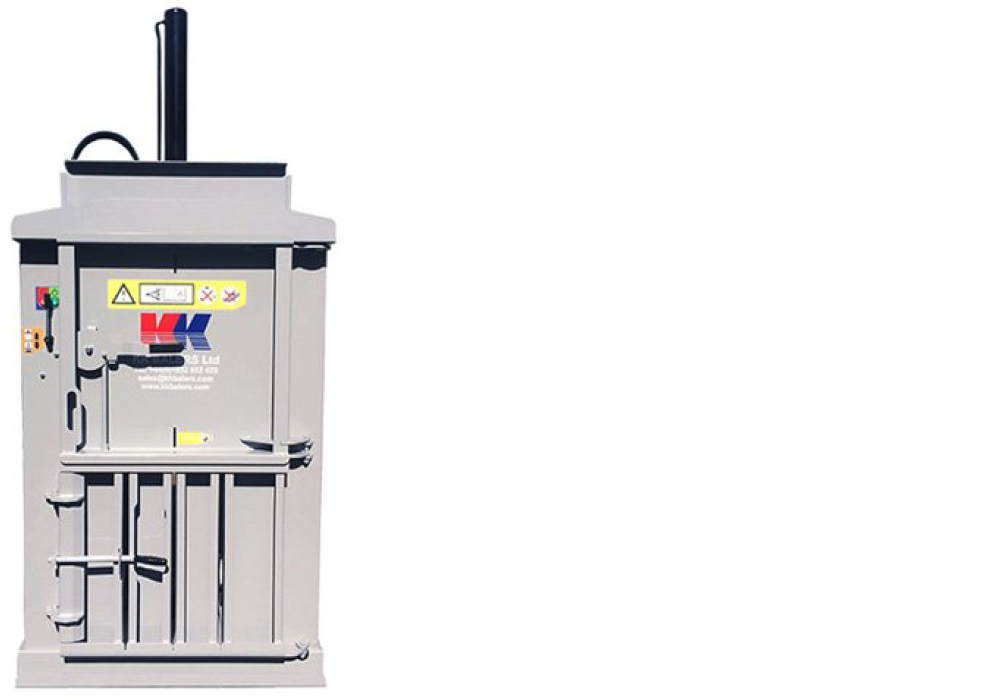
The KK Mini Baler is built as a simple entry-level baler with a single chamber, compact frame, and straightforward controls. As it’s relatively lightweight and easy to position, this makes it suitable for very small sites.
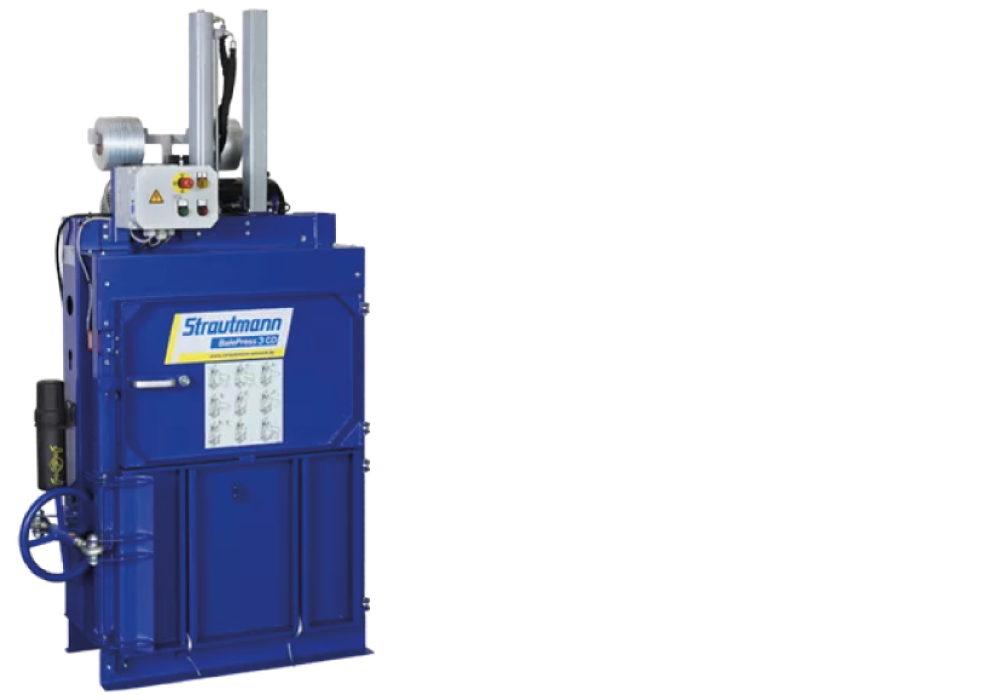
The Compact & Bale Mini BP3CD/BP4CD shares this compact design philosophy but is made from heavy-duty steel with reinforced press plates for durability. While still small, it has a more robust build suited for sites that expect regular daily use.
Verdict: Both are compact, but the BP3CD/BP4CD feels more durable for long-term use.
Performance and Capacity
The KK Mini Baler produces small bales weighing 30-60 kg, depending on material. This makes handling very easy but requires more frequent bale tying and storage space.
The BP3CD/BP4CD produces slightly heavier bales, typically in the 30–60 kg range, which means fewer bales for the same amount of waste. Heavier bales improve storage efficiency and can increase rebate potential.
Verdict: BP3CD/BP4CD takes the edge with heavier, more cost-efficient bales.
Usability and Features
The KK Mini Baler has a front-loading design and manual bale ejection, keeping it simple to operate. It’s user-friendly and requires little training.
The Compact & Bale Mini BP3CD/BP4CD offers a similar front-loading system but with a slightly larger loading aperture, making it easier to handle bulkier boxes and packaging. The manual ejection system is safe and straightforward.
Verdict: Both are easy to use, but Compact & Bale provides a more practical loading space.
Energy Efficiency and Running Costs
Both machines are powered by a standard 13-amp supply, meaning they can be plugged in almost anywhere without special wiring. Running costs are very low, making them both cost-effective solutions for small sites.
However, Compact & Bale strengthens their offer with aftercare support, spare parts access, and collection/rebate services that keep lifetime costs lower.
Verdict: Equal on efficiency, but Compact & Bale delivers more value through support.
Specification Comparison: KK Mini vs BP3CD/BP4CD
| Feature | KK Mini Baler | Compact & Bale BP3CD/BP4CD |
|---|---|---|
| Press Force | 3.5 tonnes | 4 tonnes |
| Bale Weight | 30-60 kg | 30–60 kg |
| Bale Dimensions (mm) (WxDxH) | 700 x 500 x 735 | ~700 × 500 × 500 (approx) |
| Loading Aperture (mm) | Smaller aperture | Larger aperture (700 × 500 mm) |
| Cycle Time | 24 seconds | 27 seconds |
| Power Requirement | 1.5 kW, 13-amp | 1.5–2.2 kW, 13-amp |
| Machine Dimensions (WxDxH) | 1040 x 720 x 2186 mm | 800 x x 1944 |
| Bale Ejection | Manual | Manual |
| Suitable Materials | paper, card, plastic, cloth, polystyrene, metal containers | cardboard, paper, plastic, film |
Why Bale Weight Matters
The heavier bales produced by the BP3CD/BP4CD mean more waste per square metre of storage space, fewer collections, and better potential rebates. This efficiency is key for businesses with limited space and budgets.
Compact & Bale also go further by arranging collections and rebate payments, ensuring businesses gain maximum financial benefit from recycling their waste.
Final Verdict
The KK Mini Baler is a straightforward, low-cost machine ideal for very small sites with light waste volumes. It’s easy to install, operate, and maintain.
However, the Compact & Bale BP3CD/BP4CD has a more durable build, and comes with the advantage of ongoing collection and rebate services. For businesses looking for the best long-term value, the BP3CD/BP4CD wins.