
Small vertical balers are the practical choice for businesses producing modest but steady volumes of cardboard and plastic packaging waste. They reduce waste storage, cut down on bin collections, and produce bales light enough to handle but heavy enough for rebates.
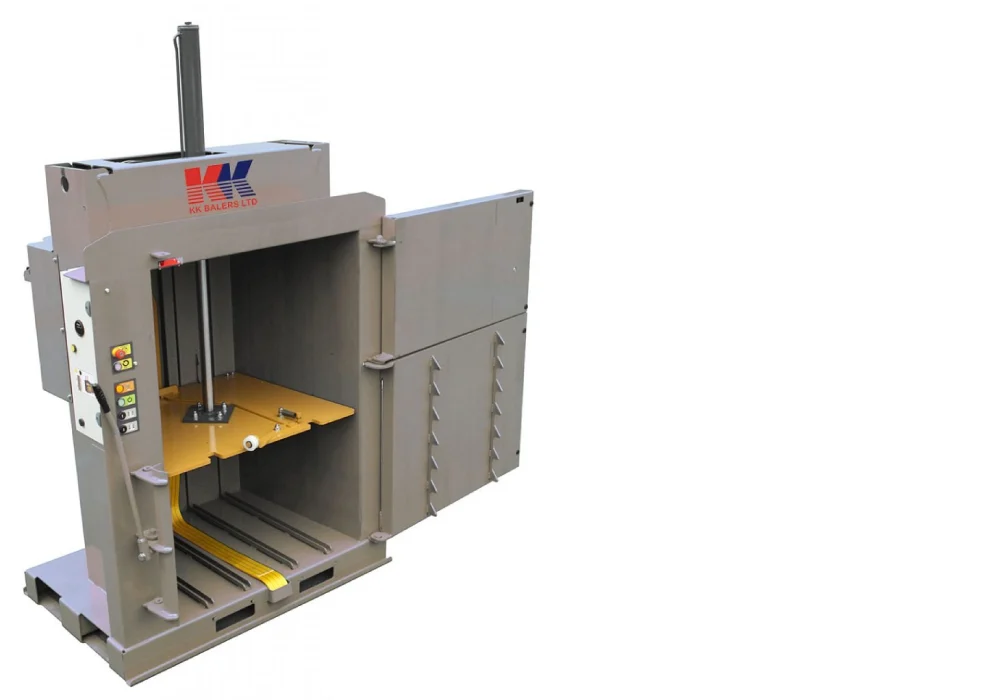
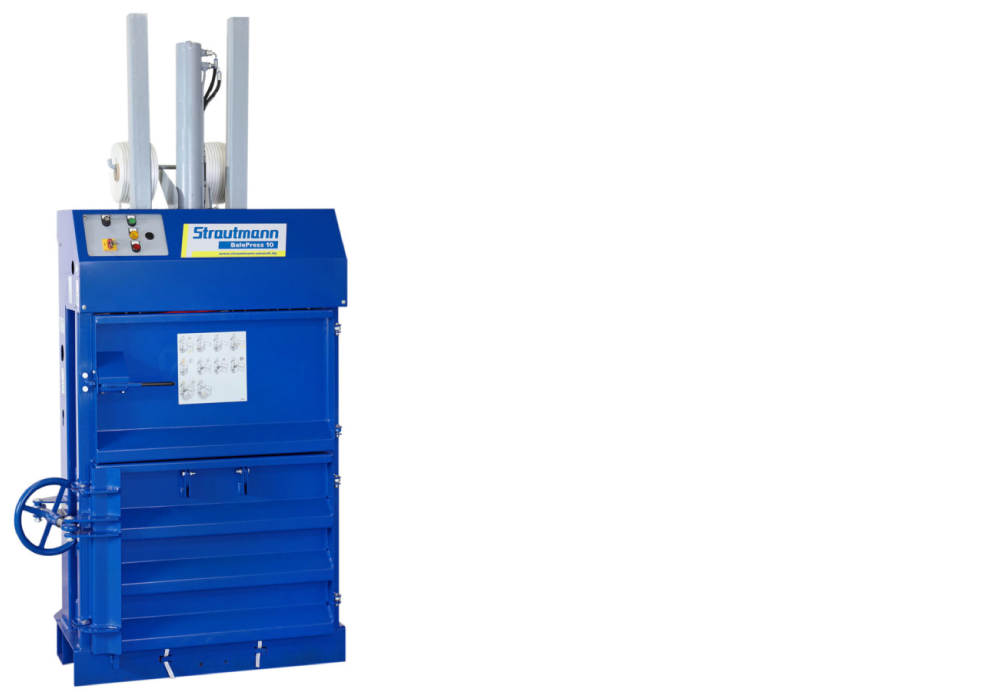
We compared the KK 10 baler with the Compact & Bale-supplied BP10 baler to see which machine delivers the best balance of performance and long-term value.
Build Quality and Design
The KK 10 is a compact baler designed for small-to-medium businesses. With a 6-tonne compaction force, it handles cardboard and plastics efficiently while keeping a small footprint.
The BP10 is built with a stronger 10-tonne press force, allowing for denser compaction and more consistent bale density. It’s slightly more heavy-duty, making it suitable for sites with more frequent waste production.
Verdict: Both are compact and reliable; BP10 offers greater compaction strength.
The KK 10 produces bales of up to 100 kg, which are manageable and suitable for rebate schemes, though slightly lighter than mid-range baler outputs.
The BP10 produces heavier bales of up to 120 kg, reducing the number of bales required per tonne of waste. This makes storage and transport more efficient, with stronger rebate value.
Verdict: BP10 leads with heavier bales and greater efficiency.
Usability and Features
The KK 10 has a 28-second cycle time, making it a quick and efficient option for light-to-medium volumes. It’s simple to load and operate, with safe bale ejection.
The BP10 improves further with a faster 18-second cycle time, reducing downtime and boosting throughput. This makes it more productive for sites with consistent or growing waste volumes.
Verdict: Both are user-friendly; BP10 is faster and better for higher throughput.
Energy Efficiency and Running Costs
The KK 10 runs on a single-phase supply, keeping operating costs low. Servicing is handled by KK Balers.
The BP10 also operates on a single-phase 13-amp supply, offering the same low energy use. Compact & Bale go further by providing collection and rebate services, which help businesses recover costs and even generate income from recyclables.
Verdict: Equal on efficiency; BP10 delivers stronger ROI with rebates.
Specification Comparison: KK 10 vs BP10
| Feature | KK 10 | Compact & Bale BP10 |
|---|---|---|
| Type | Small vertical baler | Small vertical baler |
| Press Force | 6 tonnes | 10 tonnes |
| Bale Weight | Up to 100 kg | Up to 120 kg |
| Cycle Time | 28 seconds | 18 seconds |
| Power Requirement | Single-phase | Single-phase (13-amp) |
| Bale Ejection | Manual | Manual |
| Suitable Waste | Cardboard, plastics | Cardboard, plastics, shrink wrap |
| Aftercare & Service | KK Balers servicing | C&B servicing + collection and rebates |
Why Cycle Time and Bale Weight Matter
The BP10’s faster cycle time (18s vs 28s) means more throughput in the same time, reducing labour. Combined with heavier 120 kg bales, this creates fewer bales to store and transport, improving both efficiency and rebate potential compared to the KK 10.
Wrapping Up
The KK 10 is a reliable, affordable baler for small businesses needing a straightforward way to reduce waste volume. With 100 kg bales, it’s a good entry-level solution for shops, offices, and light industrial users.
The BP10 offers more: heavier bales, faster cycles, stronger compaction force, and rebate-backed collection services. For businesses seeking the best balance of efficiency, productivity, and long-term return on investment, the BP10 will take them much further.