
For sites producing extremely high volumes of cardboard, plastic film, and other packaging waste, fully automatic horizontal balers are the ultimate choice. With continuous feed and automatic tying, they deliver maximum throughput and minimal labour input.
We compared the Landfill Alternatives LFA HA 1410 with the Compact & Bale-supplied automatic GigaBaler to see which offers the best combination of power, bale density, and long-term value.
Build Quality and Design
The LFA HA 1410 is a heavy-duty baler designed for 24/7 industrial use. Its robust frame and high 70-tonne press force make it reliable for dense compaction across a wide range of recyclables.
The GigaBaler is similarly built for heavy-duty environments but is engineered to optimise bale density with a slightly lower press force of 62 tonnes. Its focus is on producing exceptionally heavy bales, making it one of the most efficient balers in its class.
Verdict: Both are built for continuous operation; LFA HA 1410 leads on press force, GigaBaler is optimised for bale density.
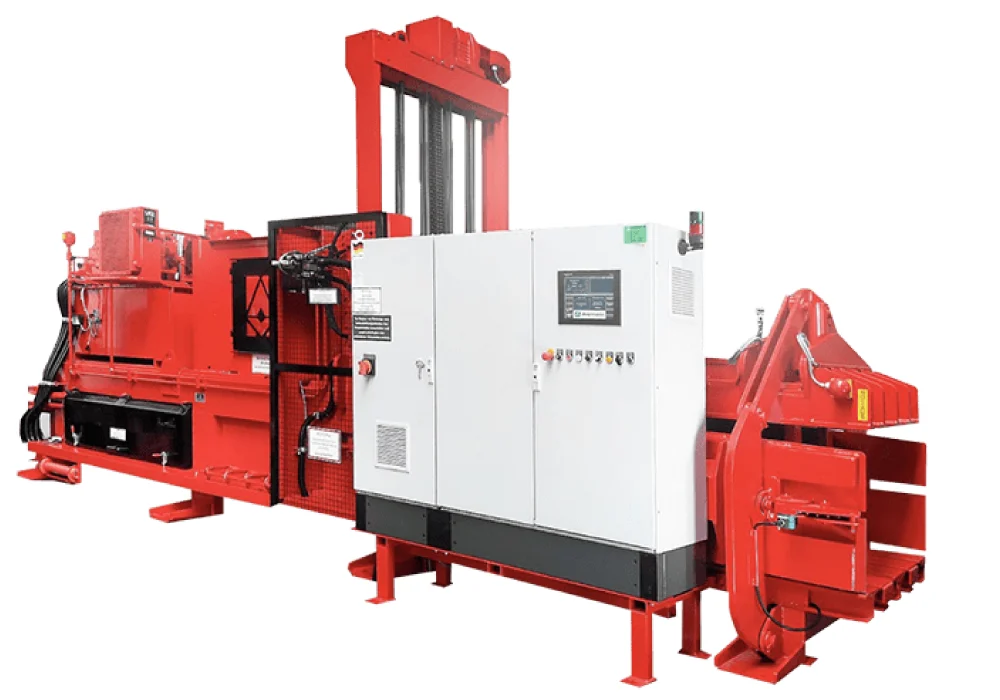
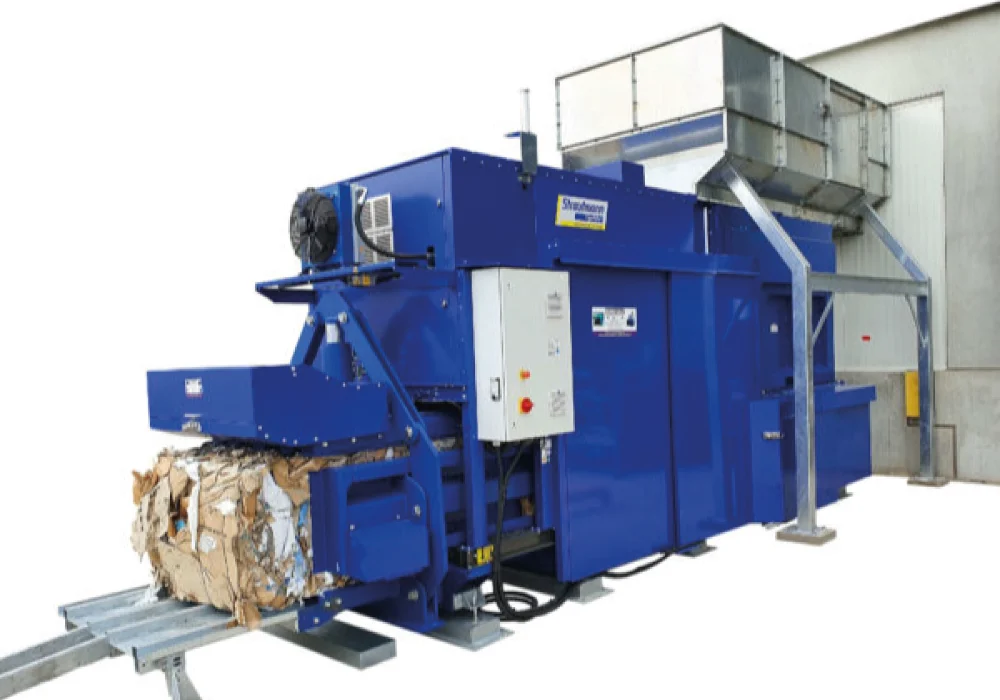
Performance and Capacity
The LFA HA 1410 produces bales of up to 550 kg, ensuring full rebate compliance and reducing transport frequency.
The GigaBaler pushes this further, producing bales of up to 600 kg. Heavier bales mean fewer to handle, less storage space required, and higher transport efficiency.
Verdict: GigaBaler delivers the heavier bale, giving it the edge for efficiency and rebates.
Usability and Features
The LFA HA 1410 includes continuous feed and automatic tying, minimising operator involvement and maximising throughput. It’s straightforward to integrate with conveyors or other loading systems.
The GigaBaler matches these features but emphasises output optimisation. It produces consistent 600 kg bales and integrates seamlessly into large-scale operations. Compact & Bale also provide full training and servicing, ensuring smooth operation from day one.
Verdict: Both minimise labour, but GigaBaler is optimised for the heaviest, most transport-efficient output.
Energy Efficiency and Running Costs
The LFA HA 1410 requires a three-phase supply and, thanks to its higher press force, is efficient for dense compaction. Servicing is managed by Landfill Alternatives.
The GigaBaler also runs on a three-phase supply and uses energy proportionate to its throughput. Compact & Bale’s model goes further by offering collection and rebate services, turning waste into a revenue stream and reducing lifetime costs.
Verdict: Equal on energy; GigaBaler offers stronger ROI with rebates.
Specification Comparison: LFA HA 1410 vs GigaBaler
| Feature | LFA HA 1410 | Compact & Bale Gigabaler |
|---|---|---|
| Type | Fully automatic horizontal baler | Fully automatic horizontal baler |
| Bale Weight | Up to 550 kg | Up to 600 kg |
| Press Force | 70 tonnes | 62 tonnes |
| Loading Aperture | Wide, continuous feed | Wide, conveyor-compatible |
| Cycle Time | Continuous, automatic | Continuous, automatic |
| Power Requirement | 3-phase | 3-phase |
| Operation | Continuous feed, auto tying | Continuous feed, auto tying |
| Suitable Waste | Cardboard, plastics, packaging | Cardboard, plastics, packaging |
| Aftercare & Service | Landfill Alternatives servicing | C&B servicing + collection and rebates |
Why Bale Weight Matters
Both machines produce rebate-compliant bales, but the GigaBaler’s 600 kg output maximises storage, reduces transport costs, and increases rebate potential. While the LFA HA 1410’s 70-tonne press force is higher, the GigaBaler demonstrates that higher press force does not always equal heavier bales — its engineering is focused on producing consistent, ultra-dense results.
Final Verdict
The LFA HA 1410 is a powerful, high-spec fully automatic baler, producing bales up to 550 kg with a strong 70-tonne press force. It’s a reliable choice for sites needing robust, around-the-clock compaction.
The GigaBaler, however, achieves 600 kg bales, delivering greater efficiency in handling, storage, and rebates. Backed by Compact & Bale’s collection and rebate service, it turns automation into both a productivity boost and a financial return.
For raw press power, the LFA HA 1410 has the edge. But for efficiency, bale weight, and long-term ROI, the GigaBaler triumphs.