

At first glance, baling cardboard appears to be an effective strategy for reducing waste disposal costs and generating additional revenue. However, a comprehensive analysis reveals that the financial benefits may not always outweigh the expenses associated with baling.
Let’s say your business produces two bales of cardboard daily, each weighing 400 kg, totalling 800 kg per day, or 5.6 tonnes per week. With disposal costs at £125 per tonne and a revenue of £10 per tonne from selling the bales, your weekly financials are:
Savings on Disposal: £700 (5.6 tonnes × £125)
Revenue from Sales: £56 (5.6 tonnes × £10)
Total Savings and Revenue: £756 per week
The Hidden Costs: Labour and Equipment

However, the process involves significant labour and equipment costs:
Labour Time: 8 hours per day, totalling 56 hours per week
Labour Costs: Assuming an average of £15/hour during weekdays and £22.50/hour on weekends:
40 hours at £15/hour = £600
16 hours at £22.50/hour = £360
Total Labour Cost: £960 per week
Equipment Costs: Baler rental at £50 per week
Total Costs: £1,010 per week
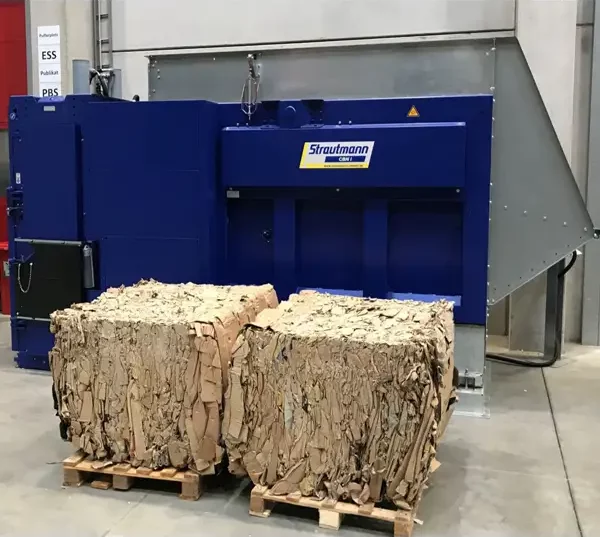
The Reality: Are You Actually Saving?
Comparing the total savings and revenue (£756) with the total costs (£1,010) results in a net loss of £254 per week. This indicates that the expenses associated with baling, particularly labour, can outweigh the financial benefits.
The 56 hours per week dedicated to baling could potentially be redirected towards more productive or revenue-generating activities. Reallocating this time might enhance overall operational efficiency and profitability.
To improve the cost-effectiveness of a baler for cardboard, consider the following strategies:
Invest in Automated Equipment: Modern balers with features like auto-opening doors and fast cycle times can significantly reduce manual labour. For instance, the range of Strautmann balers includes the BaleTainer®, which offers continuous feed and fully automatic operation, handling materials such as cardboard, paper, and plastics efficiently.
Assess Baler Size and Capacity: Selecting a baler that matches your volume of waste can optimise efficiency. Small balers are suitable for low-volume producers, while larger balers can handle higher volumes and produce denser bales, reducing the frequency of collections.
Evaluate Labour Allocation: Reducing manual handling by implementing automated systems can free up staff for more productive tasks, potentially offsetting labour costs.
Explore Cardboard Buyback Programmes: Partnering with companies that offer cardboard collection services can provide additional revenue streams. For example, Compact & Bale offers nationwide cardboard collection services, purchasing various grades and qualities of cardboard.
Baling cardboard has the potential to reduce waste disposal costs and generate revenue, it’s crucial to conduct a thorough cost-benefit analysis before committing to the process – of course cardboard baler hire is always a great option for those who cannot buy outright. By investing in efficient equipment, optimising labour allocation, and exploring partnerships for cardboard collection and buyback, businesses can ensure that their approach is both financially viable and operationally effective.